

June 8, 2023
The relationship between time and being is a fundamental question in philosophy, particularly in the field of ontology, which is the study of the nature of existence. The relationship between time and being has been explored by many philosophers throughout history, including Aristotle, Immanuel Kant, and Martin Heidegger.
One way to understand the relationship between time and being is to consider the concept of temporality. Temporality refers to the way in which time structures our experience of the world and our sense of self. According to this view, time is not just a neutral background against which events occur, but rather it is an essential part of our experience of being in the world.
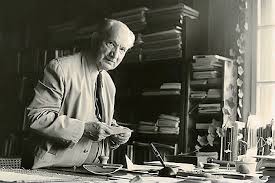
Martin Heidegger, a 20th-century philosopher, argued that time is the horizon of all our experiences and that our sense of being is intimately tied to our experience of time. He believed that our experience of time is not just a matter of measuring the duration of events but rather it is a way in which we understand the world and our place in it.
According to Heidegger, our experience of time is not linear but rather it is characterized by the way in which we project ourselves into the future and remember the past. He believed that our sense of being is rooted in this projection into the future and that our sense of identity is shaped by our past experiences.
The relationship between time and being is a complex and fundamental question in philosophy. The concept of temporality provides a way of understanding how time structures our experience of the world and our sense of self. According to philosophers such as Martin Heidegger, our sense of being is intimately tied to our experience of time, and our sense of identity is shaped by our projection into the future and our memory of the past.

 🇺🇸Welcome to NetChatTV ∞ US News, World News, Politics, Firearm News, Tech. News, and 2A Issues. I Am A Law Abiding American Citizen, A Constitutionalist and An American Patriot🇺🇸